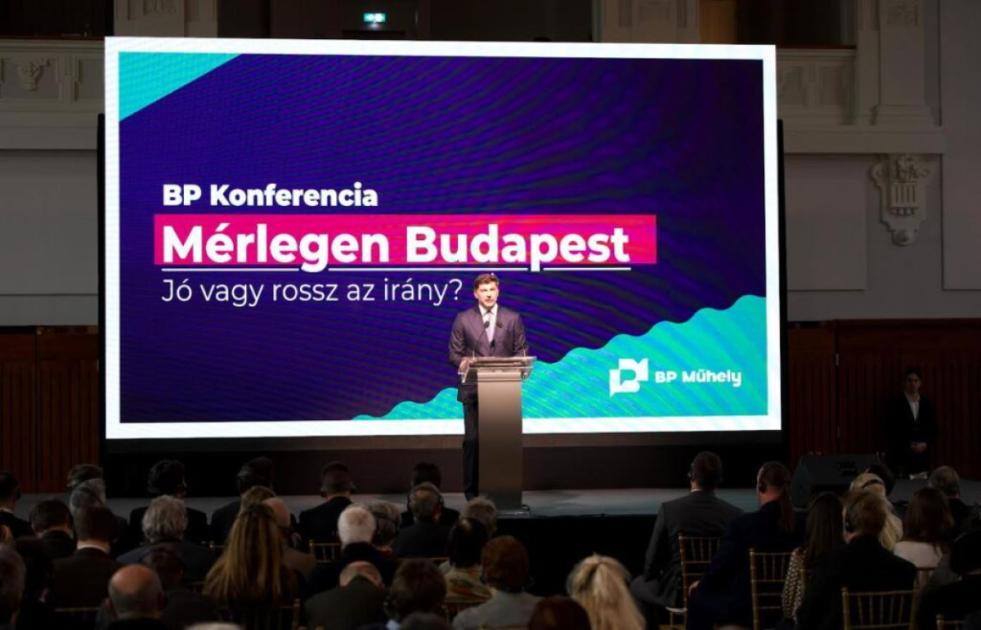




Tbilisi Mayor Kakha Kaladze, currently on an official visit to Budapest, participated in an international conference focused on urban development across European cities. The event was opened by Hungary’s Minister of the Prime Minister’s Office, Gergely Gulyás, and brought together municipal leaders and experts from across Europe.
Kaladze began his address in Hungarian and highlighted Tbilisi’s recent progress along with key upcoming development plans. He emphasized the value of learning from European cities that successfully balance growth with the preservation of historical heritage and a people-centered urban environment.
“For me, as the Mayor of Tbilisi, it is essential to learn from the experience of European cities—how they balance growth and preservation, rapid development and protection of historical heritage, transport efficiency and a people-friendly environment,” Kaladze said, noting that Tbilisi is pursuing similar priorities.
A major challenge, he noted, is the condition of aging and deteriorated buildings in Tbilisi’s historic districts. The city is replacing unsafe apartment blocks and will launch a new initiative in 2026 to strengthen safety while protecting cultural heritage. Parallel to this, Tbilisi is acquiring land to expand recreational areas and develop a stronger green network to promote healthier living.
Kaladze also outlined efforts to remove illegal parking garages and modernize infrastructure. These garages are gradually being replaced with parks and public squares, while a citywide program is upgrading old emergency elevators to improve safety in residential buildings. Public transport—once a significant weakness—has undergone a full renewal, with 200 additional buses planned for next year.
Turning to the metro system, Kaladze announced that 111 new metro cars are being introduced to enhance safety, comfort, and reduce travel intervals. Two stations are slated for major rehabilitation, and new stations are planned to improve access for tens of thousands of commuters.
He also highlighted several major upcoming mobility projects: a new public-transport bridge linking two key districts; at least three new cable car lines aimed at easing congestion and serving hard-to-reach neighborhoods; and the reintroduction of the tram system, which he described as part of a broader vision for a “sustainable, peaceful, modern, and people-centered” Tbilisi.
Like Budapest, Kaladze said, Tbilisi must continually reflect on whether it is developing in the right direction and how to preserve its identity amid rapid change. These questions, he added, resonate not only in urban planning but in the broader political landscape.
The conference was attended by Georgia’s Ambassador to Hungary, Nikoloz Laliashvili; the Head of Tbilisi’s Transport and Urban Development Agency, Nino Bagashvili; members of the Georgian Parliament; and representatives from the city halls of Vienna and Bratislava.
0
0