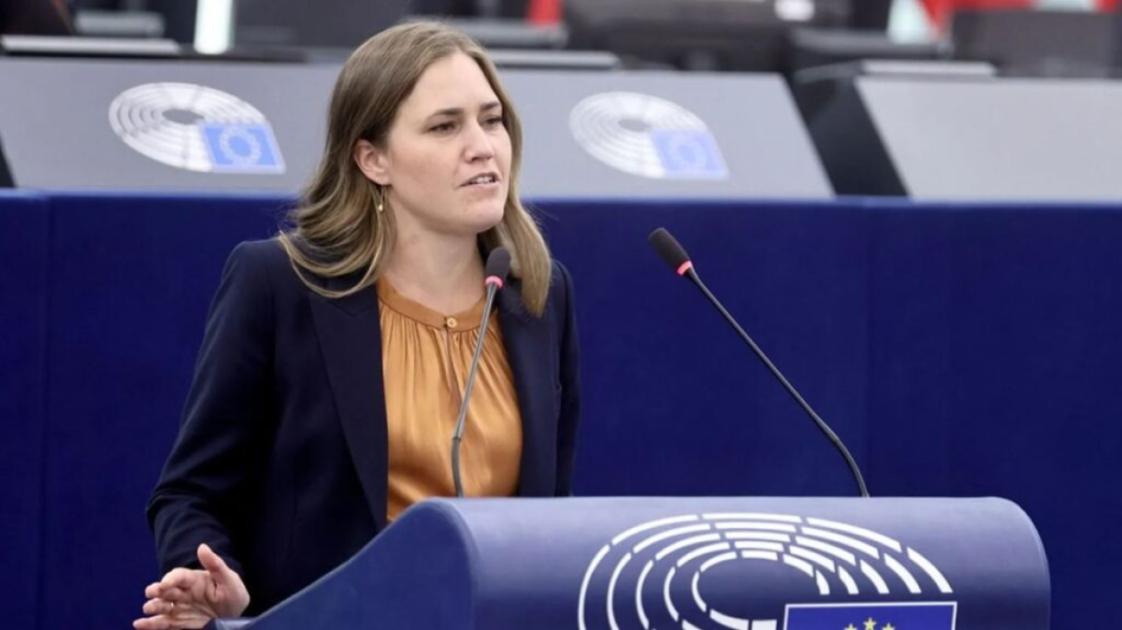




Speaking in the European Parliament during the debate on the “Deepening Democratic Crisis in Georgia,” Danish Minister for European Affairs Marie Bjerre paid tribute to Georgian citizens who have mobilized in defense of democracy and a European future.
Bjerre recalled that one year ago, thousands of Georgians took to the streets to protect their democratic rights, civic freedoms, and strong European aspirations. She said their determination to belong to Europe has remained consistent and courageous, despite political pressure, intimidation, restrictions, and efforts to shrink public space. According to her, many have shown remarkable resilience in the face of these challenges.
She noted that the European Union, including the European Parliament, has repeatedly expressed deep concern about democratic backsliding in Georgia. Among the key issues, Bjerre highlighted the deterioration of the rule of law, politically motivated detentions, pressure on independent media, and concerns surrounding the conduct of the 2025 municipal elections. She also warned about deliberate disinformation campaigns and anti-EU narratives promoted by Georgian authorities.
Bjerre further argued that Georgia has been drifting away from regional parliamentary cooperation at a time when dialogue is most needed. She pointed to Georgia’s decision not to participate in the Euronest Parliamentary Assembly meeting in Yerevan as an example of this trend.
According to discussions in the EU Council, she said, the actions of Georgian authorities fall short of what is expected from an EU candidate country. She stated that Georgia has clearly backslid on the implementation of the nine steps required for candidate status, resulting in the EU accession process effectively coming to a standstill. This situation, she said, will persist until the authorities demonstrate a firm commitment to reversing course and returning to the EU accession path.
Bjerre outlined several conditions for progress, including the release of arbitrarily detained politicians, journalists, and activists; the repeal of repressive legislation; the adoption of democratic, comprehensive, and sustainable reforms aligned with European integration principles; and an end to aggressive rhetoric toward the EU.
At the same time, she emphasized that Georgia’s European path remains open. Stressing that the EU is not delivering a verdict but offering a roadmap reflecting the will of the majority of Georgians, she concluded by honoring students, journalists, activists, and ordinary citizens who peacefully protested for democracy. Despite facing violence, intimidation, and unjust detentions, she said, their persistence demonstrates that European values remain alive in Georgia.
0
0