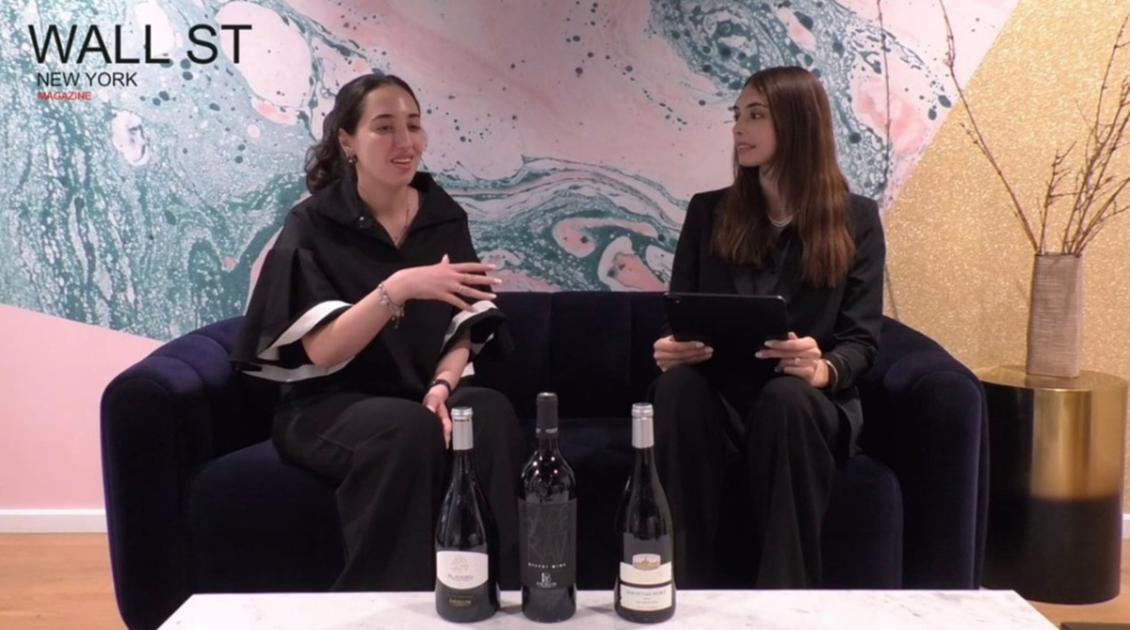




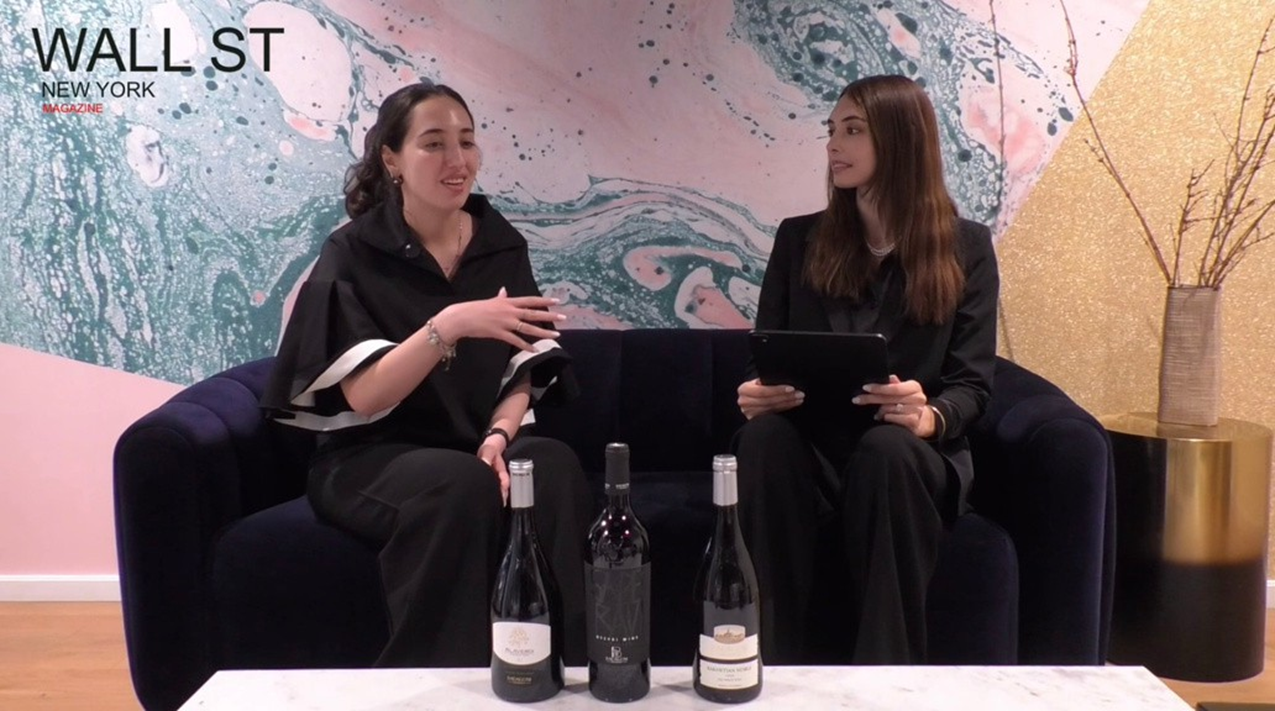
An Exclusive Interview with Badagoni Enologist Salome Salakaia for Wall St New York Magazine.
Salome speaks about Georgia as the cradle of world wine. She explores the traditional Georgian winemaking method—the Qvevri method and its seamless synthesis with modern standards.
She highlights the unique terroir of Kakheti, explaining how the distinct climate and soil composition bestow a remarkable character and complexity upon Badagoni wines. As an enologist, she places immense value on endemic grape varieties, noting that Georgia has preserved over 500 indigenous varieties for the world. Among them, she gives special prominence to Saperavi, which she calls the "King." Notably, Badagoni creates its wines exclusively from Georgian varieties.
In the interview, she mentions world-class enologist Dr. Donato Lanati with love and respect; he is the chief enologist of Badagoni since its founding. The interview also details the rigorous quality control process at Badagoni, where Salome personally oversees every stage - from harvest to bottling to ensure compliance with the highest international standards.
In conclusion, Salome expresses her pride in representing Georgia on the global stage. She believes that tradition, a focus on quality, and effective communication are the essential components that will help Georgian wine strengthen its position in the highly competitive global market. Her mission is to share the millennia-old heritage of Georgian winemaking and the profound depth of Georgian culture, which is captured within every bottle of Badagoni.

I N T E R V I E W W I T H S A L O M E S A L A K A I A D O C T O R O F E N O L O G Y A N D V I T I C U L T U R E
Maxine Hoover:
Hello and welcome to the Georgian Business Forum at Rockefeller Center. I’m Maxine Hoover, and I’m here today with Salome Salakaia, winemaker at Badagoni. Salome, it’s a pleasure to have you with us. Please tell us about yourself and Badagoni.
Salome Salakaia:
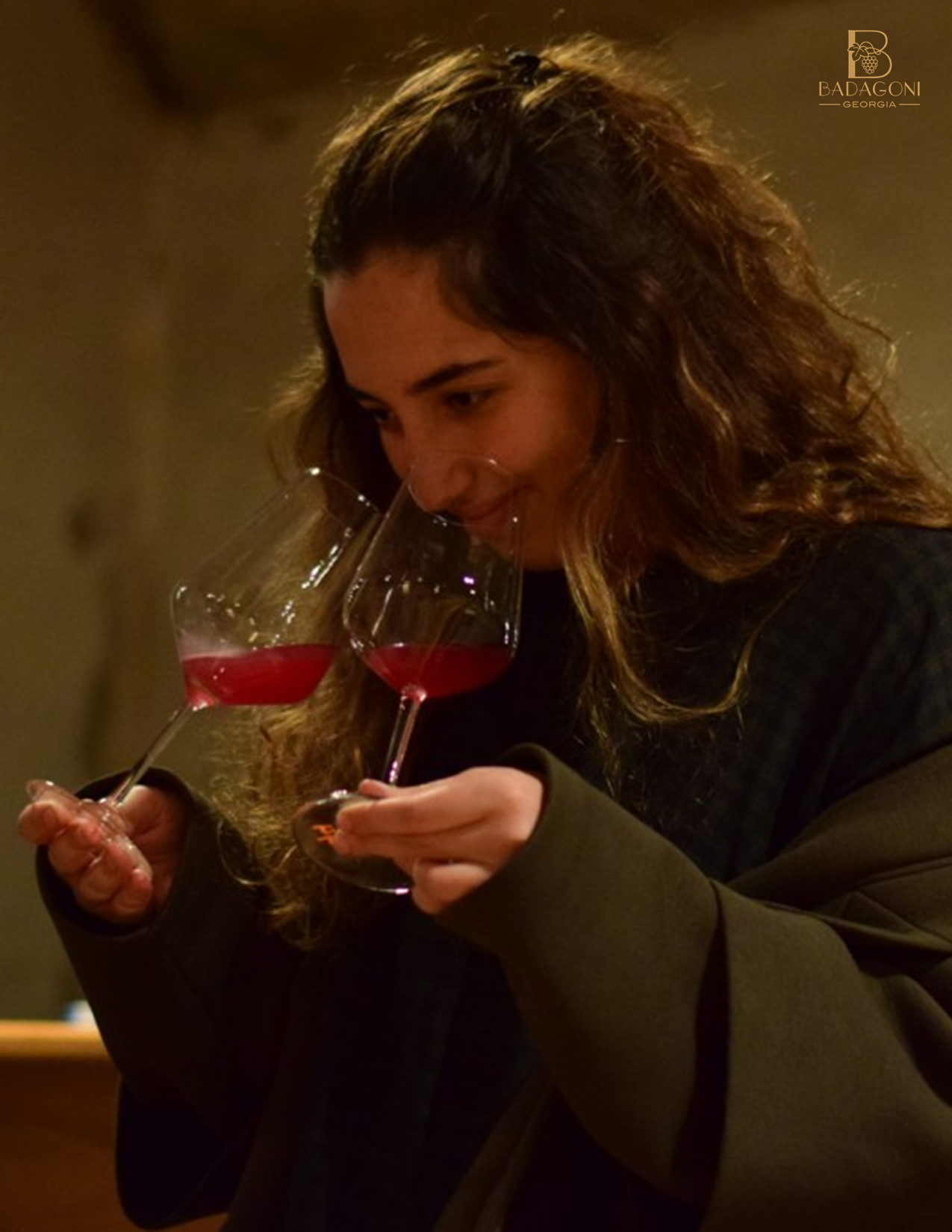
Thank you, Maxine—it’s truly a pleasure to be here. I am a Georgian winemaker, and I studied viticulture and enology at the University of Turin. After completing my studies, I gained experience working in several wineries across Italy, as well as at a research center called Enosis Meraviglia, which is also a partner of Badagoni and led by the renowned wine scientist Donato Lanati.
To understand my relationship with Badagoni, you really have to understand my family.
Badagoni is now one of the leading wine companies in Georgia, but its story began in 2006, when I was just ten years old. I grew up alongside the company, watching it evolve as my own family did. We are seven siblings, and we often joke that Badagoni is our eighth.
Returning to Georgia in 2023 and joining the winemaking team was deeply meaningful for me. It allowed me to apply my technical knowledge to something I’ve loved my entire life.
Today, I work alongside my siblings, and we all share a commitment to bringing an international perspective back to Georgia while honoring our roots.
Maxine Hoover:
That’s beautiful—what an incredible story to share with your family. Georgia is often called the cradle of wine. What does that mean to you personally?
Salome Salakaia:
For me, it means everything. Wine has always been part of human history, but what’s truly remarkable is that this story began in the region between the Caspian Sea and the Caucasus Mountains—modern-day Georgia. This is where the wild vine first survived, adapted, and was ultimately domesticated. The earliest evidence of winemaking has been discovered there.
There is also a symbolic dimension. The myth of the Argonauts and the Golden Fleece can be interpreted as the spread of agricultural and winemaking knowledge from Georgia to the ancient world. Even the word “wine” itself is believed to originate from the Georgian word “ghvino,” which evolved into Greek and Latin forms and eventually into the modern term.
Wine is deeply embedded in Georgian spirituality and identity. In pagan times, a deity associated with wine and fertility was worshipped, and even after the adoption of Christianity, the vine remained central— symbolized by the cross made of vine branches. Our alphabet is even said to be inspired by vine tendrils.
In Georgian culture, wine is not just a drink— it’s a medium for connection. At traditional feasts, it brings people together to speak about love, peace, and remembrance. So for me, drinking Georgian wine is not just about taste or aroma—it’s about experiencing emotion, history, and the spirit of the land cultivated over 8,000 years.
Maxine Hoover:
That’s incredible—thank you for sharing such depth and history. For someone trying Georgian wine for the first time, what would you recommend?
Salome Salakaia:
I would suggest beginning with Saperavi, which I consider the king of Georgian grape varieties. It’s incredibly versatile and expressive. For example, you could compare an oak-aged Saperavi with one that is not aged in oak to really understand its range and character.
I would also highly recommend trying a traditional qvevri wine made from a white grape variety. These wines are fermented in clay vessels buried underground, resulting in a beautiful amber or golden color and a rich, tannic texture. It’s a completely different experience from typical white wines. What I love most is how the wine evolves in the glass
—with every swirl, you discover something new.
Maxine Hoover:
That sounds like an experience in itself. How do you balance traditional methods with modern technology at Badagoni?
Salome Salakaia:
We don’t see modern technology as a replacement for tradition, but rather as its guardian. At Badagoni, we use a scientific approach to support and preserve the authenticity of our wines.
We rely on laboratory analysis alongside sensory evaluation to guide decisions throughout the winemaking process. This ensures quality and stability while maintaining the unique character of Georgian wine.
We are also deeply invested in viticultural research. Georgia has over 500 indigenous grape varieties, which is an extraordinary genetic treasure.
0
0